

A new measurement framework for development
COMMUNITY SOVEREIGNTY INDEX
What if we finally measured whether communities are becoming more capable of directing their own futures?
The Community Sovereignty Index (CSI) is a measurement framework developed by Sustainable Access Foundation that evaluates whether communities are building genuine local ownership, governance capacity, and economic self-determination over time. Not just whether programs were delivered. Whether sovereignty is growing.
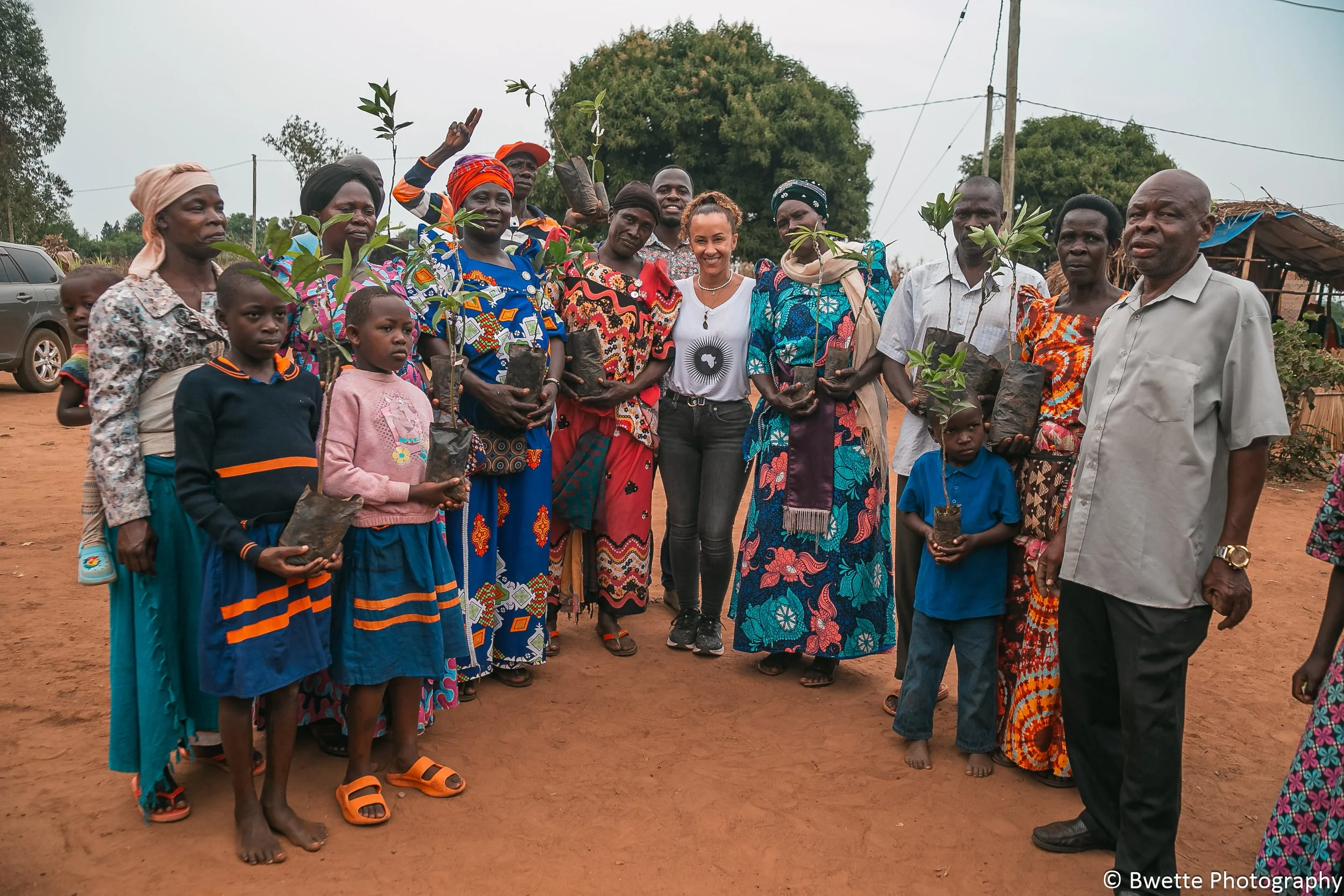
Development agencies count how many people they lift out of poverty. Rarely does anyone measure who stays out.
For decades, the field has optimized for outputs: services delivered, workshops run, short-term income gains. Those numbers are not wrong. But they do not show whether people now have better access to health care, childcare, clean water, or long-term stability. They do not show whether a community is becoming more capable of meeting its own needs, or more dependent on the next cycle of outside support.
Dr. Tynes observed this gap repeatedly across SAF's work in entrepreneurship development, digital transformation, and community partnerships in the United States and across Africa. Organizations would demonstrate strong activity metrics while communities continued to struggle with long-term dependency, limited local governance, and progress that didn't survive the end of the intervention period.
The counterexample came from communities like the one built by Denis Tibenkana through Bandera Farmer's Network International in Kamuli, Uganda. Where there had been almost no schooling, hundreds of children were now enrolled. Where there had been almost no economic activity, micro-businesses, savings circles, and self-generated livelihoods had taken root. This was not aid delivery. This was a community moving toward self-determination.
That kind of transformation needed a framework rigorous enough to measure it, and to make it legible to funders, policymakers, and the algorithmic systems now being built to govern development at scale. If those systems are trained on output metrics that cannot distinguish durable progress from fragile, aid-dependent gains, they will encode that failure structurally.
The Community Sovereignty Index is SAF's answer to that problem.
““What we measure is what we build. If we measure dependency, we build systems that reproduce it.””
The measurement system is optimizing for the wrong thing.
THE PROBLEM
For decades, the global development sector has counted what was delivered: services, infrastructure, people lifted above poverty thresholds. These metrics are not wrong. But they systematically obscure whether communities retained agency, control, or capacity for independent sustainability.
As AI and algorithmic governance scale, systems trained on these dependency metrics will reproduce dependency patterns, structurally and at speed. The infrastructure meant to address inequality risks automating it instead.
“Development agencies count how many people they lift out of poverty. Rarely does anyone measure who stays out”
— CSI Research Framework · Sustainable Access Foundation · Dr. Danika Tynes, USC
Seven dimensions of community sovereignty
THE CSI FRAMEWORK
The CSI measures a community's demonstrated capacity to define, govern, sustain, and adapt its own systems, grounded in 20+ enterprise case studies across Africa and Asia.
Where does your intiative stand?
FREE SELF-ASSESSMENT
10 questions. 5 minutes. Get a personalized sovereignty score with specific recommendations for your program or initiative.
Three forces making this moment decisive
WHY THIS MATTERS NOW
A globally recognized standard for measuring what development is actually for.
THE LONG-TERM VISION